
Let's break bread together!
A friendly guide to accommodating (my) food disability.

Wanna come over for brunch? Do lunch? Invite me to your dinner party? YES, please!!! Sharing what nourishes the body, nourishes the soul.
It’s a kind of sanctuary, eating together. Have a seat at the table, we say, you belong. The table where, hungry, we face one another & are fed. Little wonder feasts are sacrament in many faiths, like the one helped raise me: communion: the wine spilt, the broken bread.
I’ve been a foodie forever—LOVE to entertain— but a decade ago, my life & that of my family radically changed when food began making me sick. It took a while to figure out gluten & soy were key culprits,1 products so prevalent, trace amounts can be found in nearly everything. Trace amounts,2 sadly, will debilitate me3 for weeks & over time can cause irreparable brain damage. Terrifying!
Avoiding gluten & soy has reshaped my life. My sensitivity is such that even w/ growing allergen awareness, it’s risky dining out.4 Recently, I traveled to France w/my family & did not eat at a single restaurant. Same when I spent 5 weeks in Mexico for research. But I can still eat well! We stay at places w/kitchens & frequent locals’ markets.
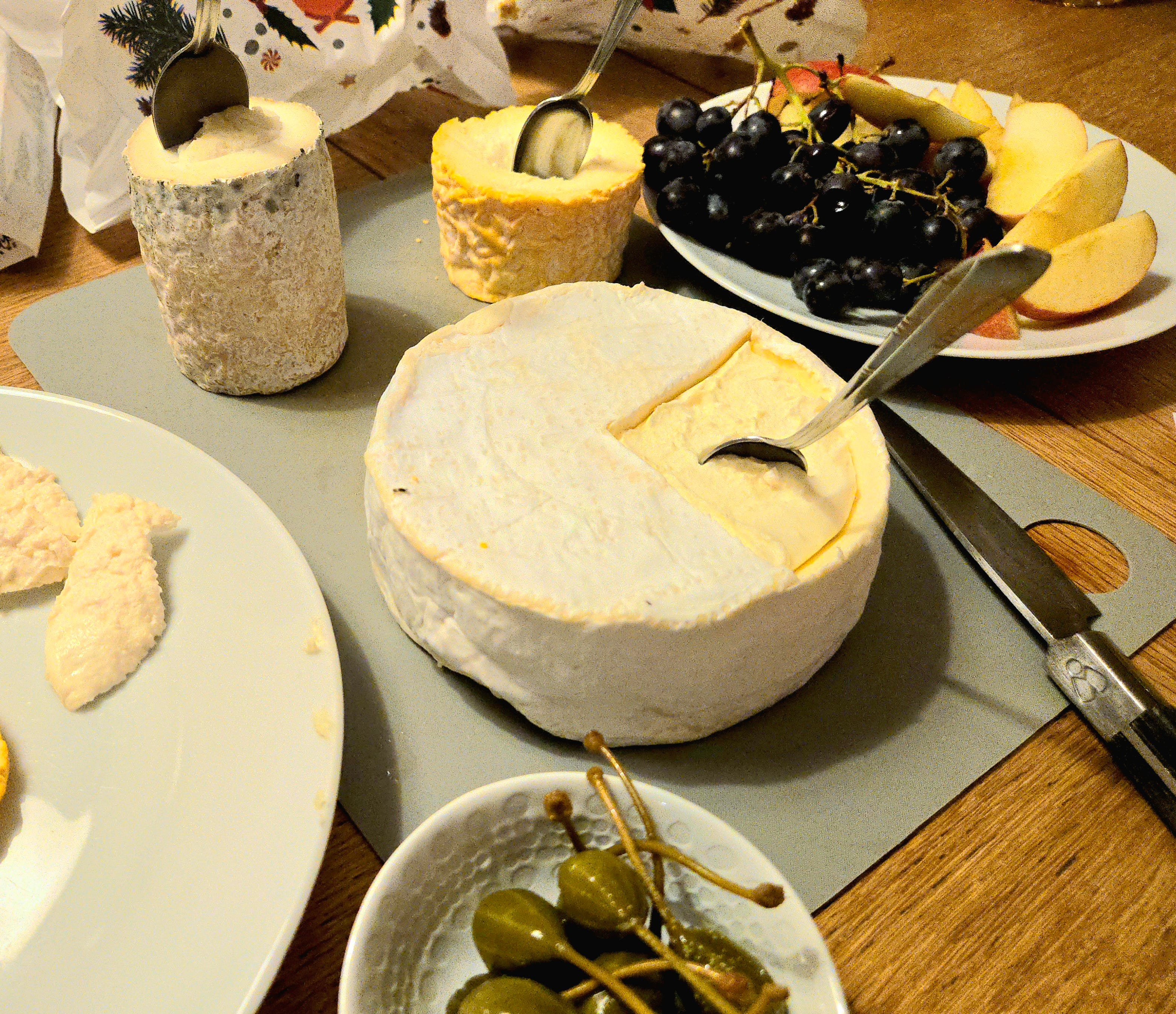
In France, my fam lunched in restaurants when we were out5 & I found a spot in a park to people watch & eat the snacks I brought. I might have taken the risk, found a promising restaurant; the French are ahead of the game w/ food accommodations & I can do butter! & heavy cream!…yaaay! But traveling w/chronic illness is hard on my body apart from eating & it had been a very stressful year. And a slip might ruin the trip—not worth the risk. Plus, I’m married to an amazing cook & one of my kids is a culinary pro. One night we had the most divine rabbit braised in wine & duck fat. We ate French & well!
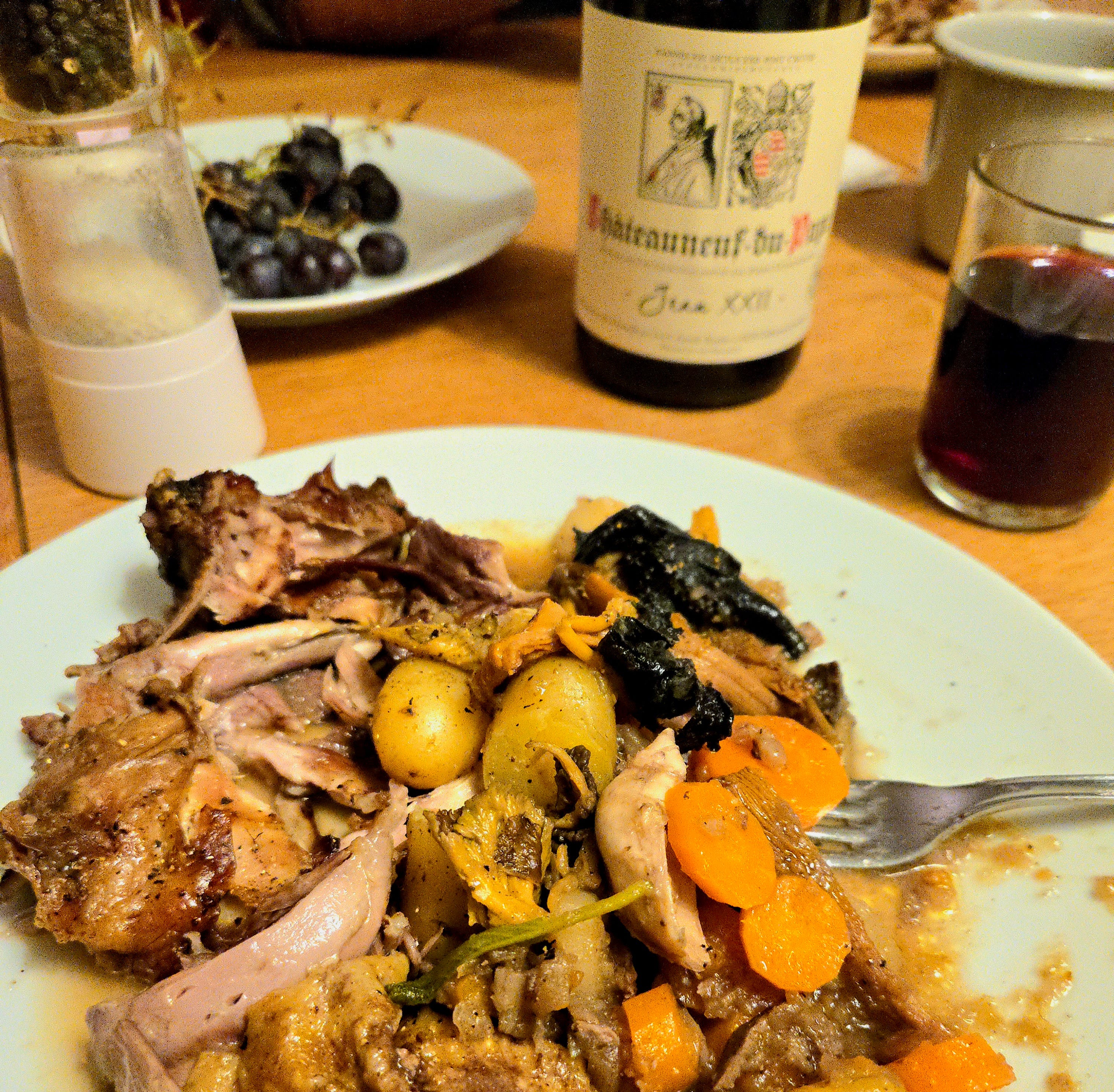
Navigating disability is a creative process. These photos feel especially joyous, standing in contrast to a lot of loss. Learning how to navigate the world & putting the strategies into practice takes big energy. And isn’t cheap.
This disability affects professional life as well. In a week or so, I’ll travel to the AWP Conference where 10 thousand writers, editors, teachers, etc. will gather to discuss all things writing. It’s intense! And for me, sourcing food is a significant additional labor. In a future post I’ll discuss strategies for traveling when one cannot eat at restaurants, but here, I want to say that amid the buzzy whirl of 3 minute conversations at the conference book fair, passing in hallways or surfing the cacophony of the hotel bar, gathering around a table to share a meal is easily the best bet for sustained conversation. But unless it’s okay for me to join but not eat, I’ll miss that respite, along w/any opportunities such conversations might yield.
This doesn’t have to be the case!
In truth, what I’ve realized—& it’s taken A WHILE to learn, let alone to articulate— is that accommodating me at your food event is easier than you think. I’ll probably need less than your other guests. But you will need to rethink what inclusion looks like. You’ll need to revise what you mean by accommodate.
In 2008, Congress amended the American Disabilities Act to expand “disability” to physical or mental impairment that substantially limits “major life activities”, which by necessity, includes eating. It also expanded what is meant by “substantially limit.” Under this important ruling, celiacs disease, for example, was covered because exclusion of gluten is the only way to avoid debilitating effects of the disease, but avoidance of gluten, as previously mentioned, is quite difficult thus limiting access to eating, a major life activity.
It is likely that I have late-onset celiacs disease;6 I have also been diagnosed w/ Crohn’s & hypermobile EDS, each of which affect individuals somewhat differently. For example, some people w/celiacs can tolerate liquors of distilled rye or wheat. Others, like me, cannot. Some can process gluten in quantities of 20ppm, a variance permitted in certified gluten free foods.7 Others, like me, cannot.
Needless to say, accommodations for people w/ food disability vary. For some, labelling the food you bring to the potluck, being mindful of common allergens, helps a lot, but not for me.
I’m really thankful to some dear friends who have pushed me to articulate more clearly how to accommodate me at social events. This post is an attempt to do that, & in so doing, perhaps help others w/eating-related disability, & those who wish to accommodate them.
Except that, what I need is probably different from what you need, different from others w/ food disability that you know. It’s taken me forever to write this because I’ve never met anyone navigating the world quite in this way, which is the only way I’ve found to keep chronic pain & other ailments somewhat at bay. Still, I hope it’s useful.
So here it is, one sentence, everything you need to prepare food that’s safe for me to eat. Ready? You can’t.8 That’s it.
I’m serious! And it’s okay! Let that be a relief.
But I can still come over for dinner!
And this is where I think the framework of disability is especially helpful. It suggests profound difference in many respects, but not others. If you think of me as having disability, it may be less strange when I arrive at the dinner party w/my own food in the same way a person who uses wheels to move their body arrives w/their own chair. Of course, this means my presence at your table will look different. My food will be different from the rest of your guests. I may need a different dish (or may arrive w/my own travel dishes) but as long as folks are careful where they fling their crumbs, we can break bread together.
So go ahead, invite me to dinner; come over for brunch; I’d love to meet at the restaurant, coffee shop, bar! Here are some tips to make it (almost) easy.
Option 1: My place!
My husband & I love to entertain & we eat well— food restrictions notwithstanding— you’d be amazed how many things I can eat when the pieces are prepared from scratch. Plus it’s easier & safer for me to eat at home, or home-away-from-home, than any place else. I worry less about cross-contamination.
If you come over for dinner, these things help me out:
Don’t insist on bringing a dish. No matter how careful you are, I can’t eat the food you prepare & trying to come up w/ a contribution that’s not dangerous is difficult. Also, my disability requires constant vigilance, but I like to be spontaneous. Coming up w/ a meal plan in advance so I can give you an assignment, hinders spontaneity & adds stress, defeating your intent to ease the burden of food prep. If there’s something you know you’d like to bring, cool— let’s talk about it— but please don’t demand an assignment.
What can you bring instead? Nothing! Truly! But if you must bring something, I get it— those rules of etiquette— here are a few ideas.
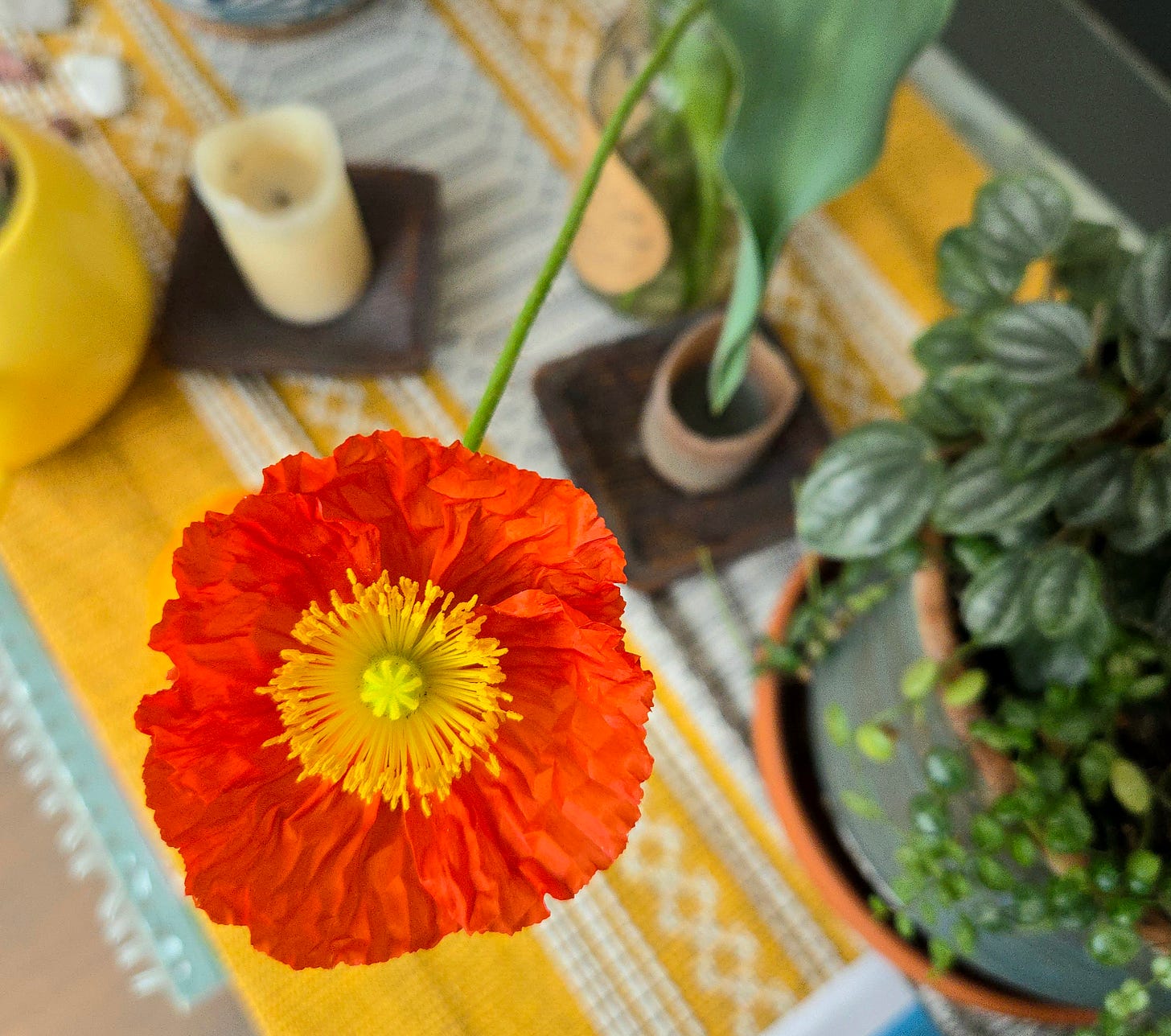
Flowers! I seldom buy them, but love them! This beauty came from our friends Stephanie & Brian!
Fresh fruit—UNCUT!
Please no chopped up melon from the deli or something you cut up at home— but anything whole is welcome!
Why uncut? Cutting is an opportunity for cross-contamination, whereas uncut fruit can be washed & chopped in our own kitchen!
Packaged delights that might be regifted.
Recently a friend, the fab poet, Julie Babcock, dropped by for drinks & snacks. One of my family members had recently died & she also brought the sweetest care package: oranges, artisan GF brownies & a tin of Golden Chai. Julie knew I might not be able to eat some goodies, but said I could regift them. I was so touched!
Julie was right about the brownies. When I checked the ingredients, I saw soy lecithin, a common chocolate stabilizer & no-go for me, but my son & his fiancé enjoyed them immensely! The chai ingredients, on the other hand, looked promising & when I took them to my next nutrition response appointment, I got the thumbs up! Yay! A new treat I might not have taken a chance on otherwise. Thanks, Julie!
Ingredients for the meal…sometimes….
Bringing ingredients isn’t as sexy as bringing a dish, but it can be a wonderful contribution, especially when it saves us a trip…
Sadly, explaining which ingredients are “safe” gets complicated. I can eat some blue cheese but not others, some gf pasta, but not others, & I can’t always recall the names. My husband & I use the app FOODUCATE,9 which has a subscription option that allows one to scan a bar code & check the presence of major allergens because even we need to double check sometimes. That said, if you offer & we’re able to describe what we need— thank you!
Alcohol
I live w/4 other alcohol-drinking adults. If you bring it, someone will drink it.
If you want to bring something I can drink & that will allow me to kiss the person that drinks it, these are the safest bets:
Silver tequila, pure
Silver rum, pure
Wheat-free vodka: Titos, Kirkland, Haku Japanese Rice Vodka…
Cider, gluten free, w/minimal other ingredients or sulfites.
European white wine. (Why European? Less sulfites. Domestic whites w/no added sulfites are also great).
Option 2: Your Place!
Yay! Thanks for having me!
Remember, I will arrive w/my own food & will not eat the food you prepare. Don’t feel bad! I’d rather this than nasty consequences. And I can still appreciate the beauty & scents of the food you prepare. I also enjoy talking about the food you prepare! I’m still a foodie! Sometimes your food reminds me of past meals or inspires me to try new things at home…yay food!
Don’t be offended when I wash a plate, glass, utensils, or area of countertop/table before using them. I live w/4 adults who regularly consume gluten & soy & at home I wash plates & such before use. Even slight residue from a previous meal left on a utensil is enough to make me sick. It happens— so I take extra precautions!
Serving bread? Sushi? No problem! I can be around gluten & soy, but if it’s airborne that’ll mess me up….so if you’re baking from scratch, plumes of flour in the air, or tossing pizza dough w/ arial acrobatics, I’ll need to keep away. For the same reason I can’t meet at a brewery or bakery. Or if I’m sitting next to you & you’re literally breaking a crusty sumptuous baguette, crumbs flying—my plate & I will have to seek cover!
You’re having a potluck? Great! If it’s just me, sans family, I’ll bring my own meal as I always do, rather than a single dish to share w/all.
You’re serving alcohol & want to accommodate me? Cool, but if I’m experiencing a flare I won’t drink, so you might check. If I’m drinking, I’ll plan to bring something that’s safe for me, unless you tell me otherwise. Silver tequila & European white wines are my safe go-tos.
Want to prepare a meal w/me at your place? Sometimes this is possible, but…it really depends on your kitchen & flexibility. If you’re obsessive about tidiness, if your fridge & counters aren’t crowded & you keep them pretty clean10…let’s talk. It would be fun to cook together! But I’ll need to bring most of the ingredients—& if we’re cooking on an outside grill— it will need a scrub.
Option 3: Going OUT!
I love a restaurant scene— festivity, food, drink—& I’ve worked my share! Now I rarely dine at restaurants & never before a high stakes event— but I’d still love to meet you out. Here’s how:
No breweries or bakeries. Even if I don’t eat or drink, I can’t hang out amid airborne gluten. If you’re hosting a reading at a brewery, I’ll sadly send my regrets.
Bars are fine! Cleaner is better. If I’m recovering from gluten or soy or another autoimmune flare, I don’t drink, but I’ll gladly hang out. When I can drink, silver tequila or European white wine at a clean bar11 are my go to’s.
Coffee shops…some roasters use flour on their conveyors, which, along w/flavor infusions, will make me sick. But, if I’m not certain what’s safe, I can get a hot tea or bottle of water or small drip I just won’t drink. This is fine! If we’re meeting for coffee, I’m there for you, not the caffeine!
Want to find a place we can truly dine together? This one needs its own post. Sometimes I can, sometimes I can’t. Letting me choose the place helps. To be continued….
Can I bring my own food? Most restaurants don’t allow outside food to be brought in— & I won’t try. But if you’re down, there are alternative venues where it’s no problem— food courts or public spots near food trucks are great! Also— picnics!!!
You’re hosting a group thing & the restaurant location isn’t flexible. No problem! I totally get it & would still love to be invited! Especially if it’s okay if I don’t order too much. It’s also nice if you don’t ask me to split the bill for food I can’t eat.
What do you think? Does this help? I hope so! I’ve tried to simplify what often (to me) feels very tedious. Over the last decade, my life has changed, but I still want you, want communion, in it! So thanks for reading & digesting these sentences, making space at your table for me to share; I look forward to you & me bread breaking together.
There are a number of other foods I can’t eat, too tedious here to list. I don’t talk about them much because avoidance is less serious; if I consume a little cauliflower the upshot is a few days of digestive issues as opposed to weeks of systemic problems after a trace amount of gluten & soy (more below).
What do I mean by trace amounts? Consider the imperceptible contamination of soy that raw almonds might pick up in a packaging facility that also packages almonds roasted w/tamari. Or the invisible dust of flour next to your stove, where a second ago you set down the slotted spoon, the spoon you’re now using to stir the pot of carefully prepared, otherwise gluten free chicken & rice soup, soup that’s now contaminated. DRAT!
How do gluten & soy effect me?
Chronic Pain. Joints, spinal subluxations, all over inflammation…
Skin problems. Breakouts on the face &/or neck w/in 24 hours of exposure. Fun fact: I can tell whether I’ve been poisoned by gluten or soy depending on the type & pattern of zits. Yuck! Extended exposure to gluten or soy—when I can’t figure out the source—triggers skin reactions elsewhere in the body, misc rashes, plaque psoriasis, etc.
Malnutrition. When gluten or soy pass through my intestines, the villi responsible for absorbing nutrients & distributing them through the body read them as poison & retract. For the next few weeks, I’ll miss out on key nutrients. Prolonged exposure leads to deficiencies that debilitate other organs & bodily systems.
Difficulty sleeping.
Brain fog.
Brain fog. It’s hard to stress this enough. I’m pretty intelligent, but after gluten/soy exposure my memory is terrible & I make foolish mistakes, like driving off w/ my phone on top of my car. When I teach after exposure, I get lost in the middle of class discussions, drop threads. I have difficulty understanding what I read. I try to be transparent w/students, friends & colleagues after an exposure, but it’s wildly frustrating. Brain fog can also makes it difficult to figure out how I got poisoned. Thus, I’m slow to try new foods, just one at a time. This simplifies tracking if something goes awry.
Irreparable effects on the brain. I do not know the degree to which I may already be subject to this, but regardless, guarding against future brain damage means I cannot be cavalier about exposure. But the constant vigilance can be exhausting.
Exhaustion & depression. These symptoms show up w/in hours of exposure, but I often miss them as symptoms in the overwhelm of sorrow & fatigue. The depression is thankfully not usually long lasting but the fatigue lasts for weeks.
The challenges of navigating restaurants, even restaurants that try to accommodate allergens & food restrictions, deserves its own post or 12. Restaurants are run by humans & humans make mistakes! I’ve had the best luck at high end steak & fish joints that prepare food to order, use separate pans, etc, but whether I’m willing to take the risk depends on my current health & the demands of the coming weeks. Can I afford to be compromised for a while if something goes amiss?
My heart often aches thinking how my family’s life has changed in order to accommodate me. But this is how we love each other. And in learning to support me navigating the world in this way, I’ve seen their consciousness & compassion grow in such beautiful ways. And it’s my hope that when the given world threatens their own health & others they love, they’ll be better equipped to problem solve w/grace.
I have the celiac gene, but can’t take the definitive test because to do so requires eating 2 slices of bread a day for 6 weeks & doing that now (after 8 years off gluten) would likely cause irreparable harm. I wish someone had suggested to get tested sooner. If you think you might have gluten issues, get tested for celiacs before you give it up!
Common sites of cross contamination include spice mills, packaging facilities, bulk food sections in groceries, grocery delis. Think it’s just cinnamon in that vacuumed sealed jar? Think again.
I know, I know. You’re good a cook! With a spotless kitchen! You have a friend w/celiacs. YOU have celiacs! And you never cook w/ soy. I hear you. But this is not a critique of you. It’s taken my husband & I years to figure out how to cook safely in my mother-in-law’s not-gluten-free kitchen, so don’t feel bad. And in a future post, I’m happy to explain some of the infinite ways gluten & soy infiltrate despite best efforts— but for now, as w/ any person articulating need relative to disability, please, believe me.
FOODUCATE uses both research & crowdsourcing to alert to allergen presence w/a greater reliability than store labels. You’d be shocked at the presence of allergens in foods that claim to be X-allergen free.
Reader, this is not how I used to keep my own kitchen! If your kitchen is cluttered & a little dirty— no judgement! In fact, as my health has required more boundaried discipline, I’ve grieved the loss of my spontaneous, whiskey-drinking, up all hours self, & I praise (from a safe distance) the improvisational beauty of creative process at play in your (possibly) messy kitchen!
Reader, I love a dive. But bars are hotbeds of cross-contamination—given that beer, gin, vodka & whiskey are all derived of gluten. Alas!
I cannot express how impressed I am at this explanation for us, Jen. How much time you put into it...wow! So well done...
This is just downright helpful!!! Thanks for such personable clarity!